Why Does Choosing a Reliable Period Underwear Manufacturer Matter?
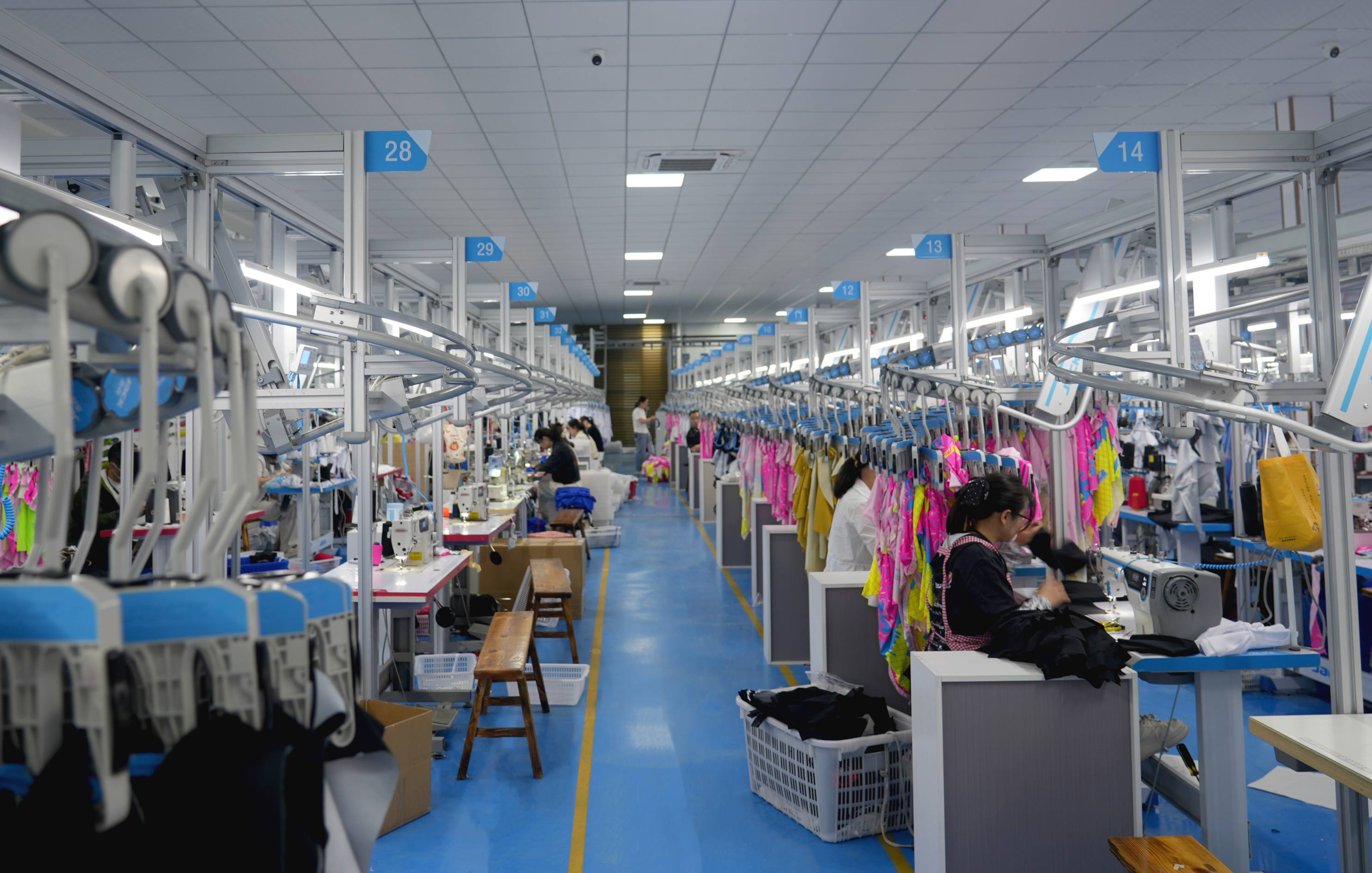
A reliable period underwear manufacturer matters because the product combines underwear construction with moisture transfer, fluid storage, leak resistance, stretch, skin contact, and repeated washing. A single pair can contain 3–5 functional layers, while ISO 6330:2021 provides standardized domestic washing procedures used for textile testing. For a 10,000-unit order, even a 2% defect rate leaves 200 units requiring rework, replacement, or another disposition. Supplier selection therefore affects sizing consistency, gusset construction, material records, production timing, testing access, and whether an approved sample can be reproduced across bulk orders.
Period underwear is harder to manufacture consistently than ordinary briefs because several materials must work together while the garment stretches during wear. A common construction combines a body fabric, skin-facing layer, absorbent textile, liquid-resistant membrane, and supporting layer; some designs merge functions and use fewer layers. A 2024 retail assortment can include light-flow, moderate-flow, heavy-flow, and overnight products, so one construction cannot automatically serve every use case.
That construction makes material control the first practical test of a supplier. Fabric composition, GSM, stretch direction, recovery, membrane thickness, absorbent-layer weight, elastic width, and gusset dimensions should appear in an approved specification rather than being left to the sewing line. If a 180 GSM fabric is replaced by a 160 GSM alternative, the 11.1% weight difference can affect opacity, hand feel, drying behavior, and garment structure even when both fabrics look similar on a cutting table.
A sample proves that one garment can be made. A production system has to show that the same specification can be repeated 1,000, 10,000, or 50,000 times.
Repeatability becomes easier to assess when brands set measurable tolerances before production. Waist, hip, rise, leg opening, gusset width, and gusset length can be measured against an approved size chart, while inspection records show whether deviations are isolated or systematic. On a 5,000-piece order, a 3% sizing nonconformance represents 150 garments, which is enough to affect stock availability for individual sizes.
Sizing control also leads to gusset placement, because correct measurements do not guarantee correct protection. A gusset shifted forward or backward can change coverage while leaving the waist and hip dimensions within tolerance. Manufacturers should therefore record placement measurements as well as finished-garment measurements, especially for high-rise, brief, bikini, boyshort, and overnight constructions whose coverage areas can differ substantially.
Fluid management adds another layer of manufacturing difficulty. The skin-facing textile needs to transfer moisture toward the absorbent structure, the absorbent component needs sufficient storage and distribution, and the barrier needs to limit migration toward outer clothing. A product containing 4 layers can fail even when every individual layer passes its own material check if stitching, compression, bonding, or edge construction creates a route around the intended protection area.
For that reason, an absorbency claim should be connected to a defined test method and finished-product construction. A laboratory result from one textile swatch does not automatically describe a complete garment. If a brand changes from 2 absorbent layers to 3, capacity may rise, but thickness, drying time, stiffness, and washing behavior can change as well; evaluating only the largest fluid number gives an incomplete picture.
Ask what was tested, which product size was used, whether the result came from a material or finished garment, how many samples were tested, and whether testing occurred before or after laundering.
Testing after washing matters because period underwear is reusable. ISO 6330:2021 describes domestic washing and drying procedures for textile testing, allowing brands and laboratories to establish repeatable laundering conditions. A brand might compare measurements and functional performance at 0, 5, 10, 25, or another specified number of cycles rather than assuming the first-use result represents long-term use.
Wash testing should cover more than absorption. Elastane-containing body fabrics can lose recovery, laminated structures can separate, seams can distort, and dimensional changes can alter fit. A 4% shrinkage rate across a 750 mm garment dimension equals 30 mm, large enough to change how the underwear sits on the body even if the absorbent section remains intact.
Material chemistry requires similar attention because underwear stays in prolonged skin contact. For products sold in the European Union, REACH Regulation (EC) No 1907/2006 places restrictions on specified chemicals in articles, while brands may also request independent restricted-substance testing according to their market and material profile. A manufacturer should be able to identify mills, fabric references, dye lots, membrane suppliers, and applicable reports instead of supplying an unrelated certificate.
Documentation should follow the actual materials entering production. A report dated 2023 for Fabric A offers limited assurance if the factory quietly replaces it with Fabric B in a 2026 order. Purchase records, lot identification, approved swatches, bills of materials, and change approvals give buyers a practical way to compare what was sampled with what was cut and sewn.
Traceability becomes more useful when a complaint appears months later. If 40 complaints come from a 20,000-unit shipment, batch information can help determine whether the cases share a fabric lot, sewing line, production date, size, or gusset material. Without lot records, a brand may need to review the full 20,000 units instead of a narrower production group.
Manufacturing control should therefore begin before sewing. Incoming inspection can check fabric width, shade, visible defects, stretch, material identity, and quantity; in-line checks can examine seams and gusset placement; final inspection can review finished dimensions, appearance, labeling, and packaging. A supplier performing only a final visual inspection may discover a repeated construction error after thousands of pieces have already consumed labor and materials.
Inspection plans also need agreed acceptance rules. ISO 2859-1:1999 provides sampling procedures for inspection by attributes and remains a widely recognized reference for lot-by-lot inspection systems. Brands should define defect classifications and acceptance requirements with their quality provider rather than copying an arbitrary AQL number from another apparel category, since a loose thread and a compromised leak-resistant section do not carry the same product consequence.
The quality conversation then moves naturally to seam construction. Needle selection, stitch density, thread, seam allowance, elastic tension, and needle damage can influence comfort and durability. If a factory increases line speed by 15% without maintaining sewing control, the commercial benefit disappears when skipped stitches, puckering, uneven elastic, or damage to functional layers requires rework.
Production capacity deserves the same numerical treatment. A supplier claiming 100,000 pieces of monthly capacity may not have 100,000 pieces available for one buyer because existing orders, style complexity, labor allocation, and material lead times consume part of that capacity. A buyer needing 30,000 units in 45 days should ask for available capacity during the requested production window, not the factory's theoretical monthly maximum.
| Area to verify | Useful information to request | Why it matters |
|---|---|---|
| Materials | Composition, GSM, supplier, lot reference | Limits unapproved substitutions |
| Gusset | Width, length, layer structure, placement tolerance | Affects coverage and fluid management |
| Washing | Method and cycle count, such as 10 or 25 cycles | Shows changes after reuse |
| Sizing | Measurement chart and tolerances | Reduces inconsistent fit |
| Inspection | Sampling plan and defect definitions | Creates measurable acceptance rules |
| Capacity | Available output for the required 30–60 day window | Supports realistic delivery planning |
Capacity information also exposes the importance of raw-material lead times. Sewing may take only a portion of the calendar, while custom-dyed fabric, laminated material, branded elastic, labels, and packaging can arrive on different schedules. If a custom component requires 35 days and garment assembly requires another 20 days, a promised 30-day total lead time needs a clear explanation.
A manufacturer should communicate those dependencies before a purchase order is placed. Changes made after approval can affect several specifications at once: increasing gusset length by 25 mm changes pattern dimensions and material consumption, while replacing a waistband can require new stretch testing and fitting. Written revision numbers help prevent a factory from producing bulk goods from version 3 when the brand approved version 5.
Communication quality can be assessed during sampling rather than after a large deposit. Send a detailed specification and record how many issues the supplier identifies before making the first sample. A factory that asks about tolerance, stretch direction, absorbent-layer position, grading, label placement, and packaging is demonstrating a different level of production preparation from one that returns a visually similar garment without documenting its construction.
Sampling should then progress through controlled stages. A development sample can establish shape and materials; a fit sample can address measurements; a pre-production sample can represent the approved bulk specification. If 3 rounds are needed, every round should have dated comments and revision records so corrections from round 1 are not accidentally reversed in round 3.
Brands working with OEM suppliers such as Ljvogues should apply the same verification process used for any manufacturer: request material specifications, confirm which operations are completed in-house, examine relevant test documentation, establish tolerances, and approve a production reference sample. Supplier claims are more useful when they can be matched to dated documents, physical samples, and measurable requirements.
Factory location and subcontracting also deserve review. Knitting, dyeing, lamination, cutting, sewing, printing, and packaging do not always happen under one roof. If 3 outside facilities participate in production, the brand should know which company controls each process, how lots are identified between facilities, and who handles nonconforming materials.
Outsourcing is common in textile production. The practical question is whether every outsourced process remains covered by the approved specification, inspection procedure, and material records.
Commercial terms become easier to compare once production controls are understood. A quote of $4.70 per unit is not automatically cheaper than $4.95 if the lower quote excludes testing, individual packaging, custom labels, inspection, or a required material. Across 20,000 units, the headline difference is $5,000, but rework on 1,200 units at only $1.50 each already adds $1,800 before freight, replacements, or customer service are counted.
Minimum order quantities need the same detail. A factory may advertise an MOQ of 500 pieces, while fabric mills require 1,000 meters per custom color or branded elastic requires several thousand meters. Buyers should ask for MOQ by style, color, size assortment, fabric, waistband, print, and packaging because the finished-garment MOQ alone may not describe the purchasing commitment.
Lower MOQs can help with early demand testing, but scale introduces a different problem: maintaining the approved standard as volume rises. Moving from a 1,000-piece order to 25,000 pieces may require additional sewing lines or production days. Brands should ask whether the same line, machinery, quality procedures, and material sources will be used after volume increases.
A pilot order can provide useful production information before that expansion. For example, a 1,000-unit first order gives the brand enough pieces to review measurement consistency, packaging accuracy, workmanship, wash performance, and defect patterns without exposing the inventory budget to a 20,000-unit commitment. The pilot is most informative when inspection findings are recorded by defect type rather than reduced to a single pass/fail result.
Complaint data can later feed back into manufacturing specifications. If 2.5% of buyers report tight leg openings in one size while adjacent sizes remain near 0.5%, measurement and elastic-tension records can be reviewed before changing the entire pattern. If leakage reports cluster around one production lot, gusset materials and seam records from that lot provide a better starting point than changing every product.
Returns should also be separated by reason. Fit, leakage, stitching, delamination, wrong item, cosmetic defects, and customer preference describe different manufacturing situations. A brand with a 6% total return rate learns little from the overall number; discovering that 3.5 percentage points come from fit while 0.4 percentage points come from workmanship gives the manufacturer a much clearer area for corrective work.
The same discipline applies to packaging and labeling. EU textile products generally need fiber-composition information under Regulation (EU) No 1007/2011, while destination-specific requirements should be checked for every sales market. A 10,000-piece shipment with 2% incorrect size labels creates 200 potentially misidentified products even when every garment itself is correctly manufactured.
Private-label work adds artwork, barcode, polybag, carton, insert, and assortment requirements. A purchase order might require 5 sizes across 4 colors, producing 20 SKU combinations before packaging variations are counted. Packing lists and carton markings should therefore be checked against approved SKU information rather than relying on visual recognition at the end of production.
Supplier evaluation should finally examine how problems are handled, because no manufacturing process has a permanent 0% defect rate. A useful corrective process identifies the affected lot, records the defect, determines where it entered production, contains remaining inventory, and changes the relevant procedure. If 75 defective pieces are found in a 5,000-unit lot, replacing 75 pieces addresses the shipment; preventing the same defect in the next 20,000-unit order addresses manufacturing performance.
A reliable period underwear supplier can show this work through records rather than broad promises. Material specifications, dated sample approvals, ISO-based test methods where applicable, measurement reports, inspection results, lot references, capacity plans, and documented revisions give a brand information it can verify. When one approved construction has to be reproduced across tens of thousands of washable, skin-contact garments, repeatable manufacturing matters more than a perfect showroom sample.